Original
Prove the game loop
The Xamarin.Forms version established that a simple listen-and-identify loop could make repeated ear training feel approachable.
Personal project · iOS and Android
I built Pitchie to make pitch recognition feel more like a quick game than a study session.
In short: Pitchie began in Xamarin.Forms and was rebuilt with React Native and TypeScript. Its core loop stays intentionally simple: hear a note, identify it, earn points, and keep responding as the time pressure increases.
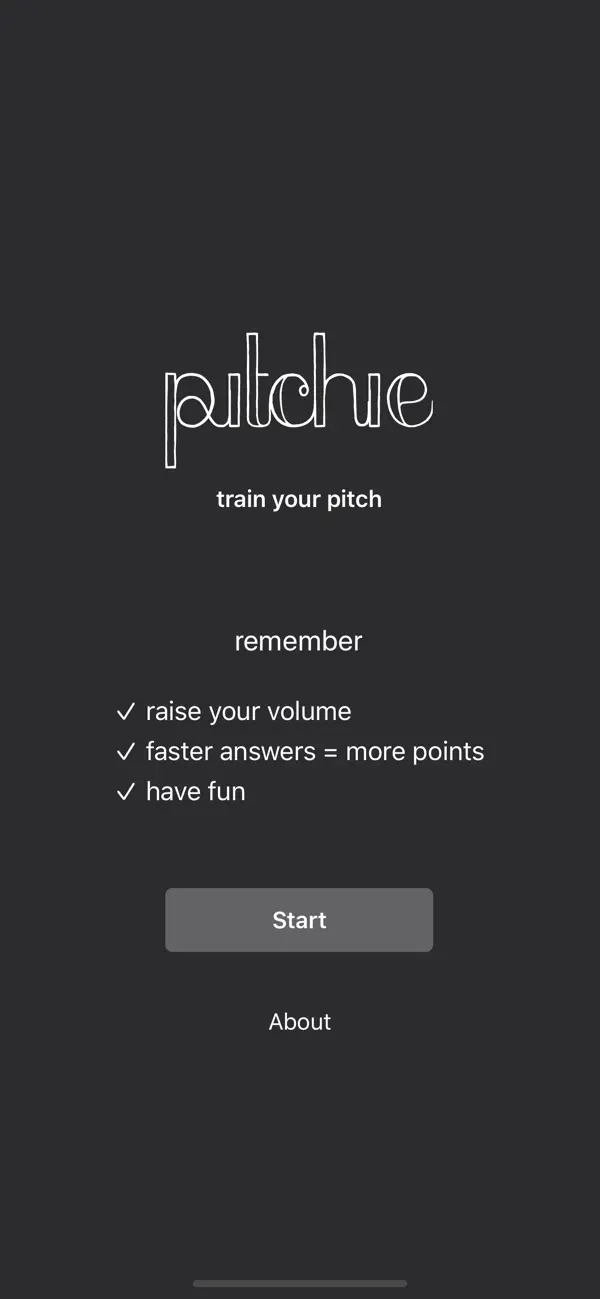
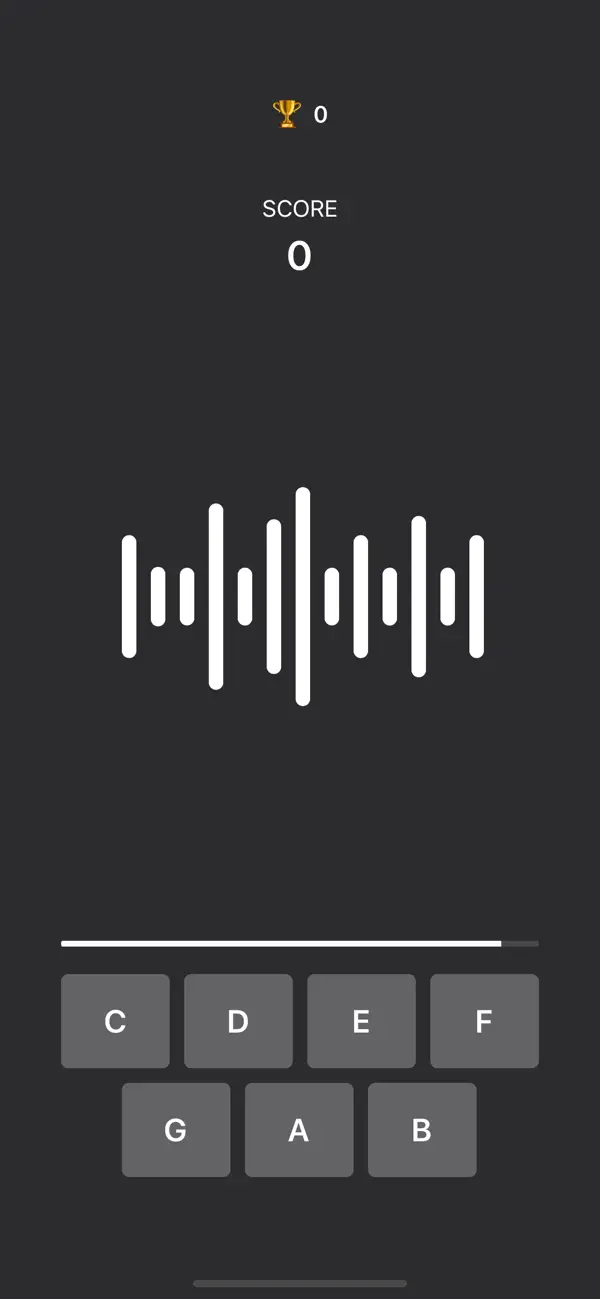
Ear training improves through repetition, but repetition is easy to abandon when the experience feels like homework. I wanted something lightweight enough to open for a few minutes and structured enough to make each attempt feel consequential.
The product depends on a short feedback loop. A player should understand what to do immediately, hear the result of a choice, and want one more attempt without navigating through a lesson plan.
Original
The Xamarin.Forms version established that a simple listen-and-identify loop could make repeated ear training feel approachable.
Current
I rebuilt Pitchie with React Native and TypeScript while protecting the game's simplicity instead of using the migration as an excuse to add unnecessary features.
Pitchie is available on iOS and Android as a focused music-learning utility. The result is not a large curriculum or an elaborate rhythm game; it is a replayable way to practice one skill with very little setup.
Educational software does not need to feel instructional at every moment. A clear rule, immediate feedback, and a reason to try again can turn deliberate practice into something people are more likely to repeat.
Tell me what you are trying to build and where it is getting difficult.